On November 2, 2026 GW Law’s Christopher Yukins spoke at the University of Buenos Aires’ International Conference on Public Procurement and 1st International Conference on Public and Administrative Law. He joined a panel focused on “Global Experiences and New Agreements: The Impact of the Mercosur–European Union Agreement on Public Procurement.” His presentation assessed how the EU-Mercosur trade agreement may intersect with the European Union’s proposed regulation on public procurement (the EU “Public Procurement Act.” He noted that the “European Preferences” built into the EU’s proposed regulation may leave EU-based vendors with an asymmetrical advantage compared to their counterparts in the Mercosur nations.
Professor Yukins also discussed the many parallels between the EU-Mercosur trade agreement and the WTO Government Procurement Agreement — parallels that suggest that the Mercosur nations (such as Argentina and Brazil) could, if they chose, seek to join the GPA to give their vendors access to broader public procurement markets worldwide.
This article notes that, although the World Bank overhauled its procurement framework a decade ago, its bidder complaints process – an integral part of that framework – has not been updated to meet international best practices. The current process for bidder complaints affords relatively little transparency and accountability, and has been criticized (including by the U.S. Government Accountability Office) for failing to provide disappointed bidders an effective means of challenging failures in a procurement process. Reforming the Bank’s complaints process could be done by aligning it with international best practices, using (among other things) the benchmarks suggested by the Methodology for Assessment of Procurement Systems (MAPS), which was developed with the support of the World Bank and the Organisation for Economic Co-Operation and Development (OECD) and which is regularly relied upon by the Bank. The complaints processes established by two other multilateral development banks, the European Bank for Reconstruction and Development (EBRD) and the European Investment Bank (EIB), also offer important benchmarks for reform. By updating its bid complaints process to meet international best practices, the World Bank could better ensure robust competition in the procurements it funds, bring to light more procurement failures for correction, and reinforce international confidence in the Bank’s important work.
The article was written by Christopher Yukins, George Washington University Law School and Eli Whitney Debevoise II, a partner at the law firm of Arnold & Porter and previously U.S. Executive Director of the World Bank.
The article concludes by noting that the Bank’s 2015–2016 reform of its procurement framework and bid complaints processes marked a critical step in improving the Bank’s overall procurement procedures. The reform signaled a clear shift in the Bank’s approach to funded procurement. But the reform of the Bank’s procurement framework was only the first step—additional steps, including improvements to the Bank’s complaints process, will be needed to make the Bank’s procurement framework as strong as possible. To align the Bank’s bid complaints process with international best practices, the article notes that the Bank may wish to consider the following reforms:
Independent Review: Allow a vendor independent review (by appeal or otherwise) before an independent body (perhaps within the Bank itself, as the EIB and EBRD do) or a court – not just review by the purchasing agency, which may have serious conflicts of interest when asked to review its own actions.
Access to the Administrative Record: Afford vendors access to the administrative record, to allow a fair assessment of the claimed agency errors.
Set Deadlines: Apply fixed timelines for decision to avoid unnecessary delay, both to the project and to the parties involved.
Transparent Process: Afford transparency in the Bank’s review of the complaints process, to ensure the confidence of the complaining party – and the public – in the process.
Publish Decisions: Ensure that decisions on bidder complaints are made in writing upon reasoned grounds and an available record, and made publicly, to reinforce public confidence in the Bank’s (and the borrowers’) decisions, and to provide guidance for future procurements.
These reforms could help make the Bank’s complaints process more reliable and so encourage competition in Bank-financed projects, improve procurement outcomes and reinforce public confidence in procurement done with World Bank financing.
This article was published in the Swedish Procurement Law Journal, Upphandlingsrättslig Tidskrift, edited by Andrea Sundstrand at Stockholm University.
Citation: Christopher Yukins & Eli Whitney Debevoise II, Updating the World Bank’s Bidder Complaints Process To Meet International Best Practices, UrT 2026 p. 49, available at https://papers.ssrn.com/sol3/papers.cfm?abstract_id=7642798.
The European Union’s proposed regulation governing public procurement, the “Public Procurement Act,” was published in September 2026. This brief article reviews key elements of the legislation — competitive methods, e-procurement, and a new “European Preference” — from a U.S. perspective.
Citation: Christopher R. Yukins, The EU Public Procurement Regulation: A U.S. Perspective, 68 Gov. Contractor ¶ 229 (Thomson Reuters, Sept. 2026)
The United Nations Commission on International Trade Law (UNCITRAL) is preparing for a potential “targeted review” of the 2011 version of the UNCITRAL Model Law on Public Procurement. This post reviews the issues that may be taken up in that review, after a July 2026 meeting of the Commission and in preparation for a working group meeting in February 2027 at UN headquarters, New York.
In May 2025, the UNCITRAL secretariat identified possible areas of reform to the Model Law in document A/CN.9/1230, paras. 17-26. The UNCITRAL secretariat in January 2026 issued a “request for inputs” regarding possible updates to the 2011 model law and its related texts (including the Guide to Enactment). The request from the UNCITRAL secretariat raised a number of issues that may be addressed in a reform of the 2011 law, which were further clarified at the Commission’s July 2026 meeting in New York City (Report A/81/17).
The topics for review stand as described in the table below after that July 2026 Commission meeting. These are many of the same issues originally proposed for review by the UNCITRAL secretariat, which the Commission favorably considered in asking the secretariat to undertake preparatory work for a possible update of the model law (see A/81/17, para. 219).
UNCITRAL Working Group Meeting (Vienna)
The Commission’s report noted (para. 315) that the first meeting of UNCITRAL’s Working Group I on procurement will be from February 1-5, 2027 (New York); ultimately, this may be the only meeting of the working group. Information on the working group meeting is available here.
Because the Commission report from the July meeting favorably noted “legislative developments in a specific jurisdiction” — likely the European Union’s proposed regulation to revamp public procurement — the table below also references relevant portions of the “Public Procurement Act” published on September 9, 2026 by the European Commission. An October 5, 2026 academic webinar on the EU’s proposed legislation (with extensive research materials) is linked at the bottom of this post.
Topic
UNCITRAL Model Law and Texts: Potential Areas of Reform
Current Status
Green Procurement
The Commission has declined to take up issues of “green procurement” (environmentally sustainable procurement), but a key issue here is one of trade – the Commission’s core area of expertise. Some have suggested that the Commission assess the barriers to trade raised, for example, by ecolabels, and seek to facilitate the use of green procurement under existing law.
No further action.
The EU’s proposed “Public Procurement Act” contains a range of provisions on “green procurement” and integrating environmental concerns into public procurement processes.
Suspension and Debarment
The Commission has indicated that it may wish to expand the Model Law and Guide to Enactment on exclusion and debarment – the process, an inherent part of contractor qualification, by which a public purchaser excludes contractors that pose unacceptable performance or reputational risks.
Topic endorsed for further work.
The EU’s proposed “Public Procurement Act” addresses grounds for exclusion in Arts. 25-26.
The EU’s approach to vendor exclusion is evolving. A World Bank survey of debarment practices worldwide is here.
E-procurement
The Commission may consider lessons learned from the procurement of IT projects, the need for new evaluation criteria, enhanced governance, ownership and control of data used to build large language models (LLMs) and of the public sector data used in operating LLMs, and organizational and capacity challenges, to avoid reproducing errors such as inappropriate specifications, integration failures, and poor outcomes.
Topic endorsed for further work.
The EU’s proposed “Public Procurement Act” deals with e-procurement extensively in Arts. 127-136.
Contract Administration and Contract Termination Procedures
Ensuring sound contract administration – including fair termination procedures – is essential to robust competition. To that end, the invitation for inputs asked whether this topic should be addressed “by reference to the provisions and related guidance contained in” the UNCITRAL Model Legislative Provisions on Public-Private Partnerships. Those PPP provisions usefully identify terminations for convenience and default. But they are merely a starting point, for they fail to address the prior notice normally required for a termination for default, or the necessary boundaries to a government’s right to terminate for convenience.
Unclear — further action unlikely.
The report from the July 2026 Commission meeting, A/81/17, was unclear on whether these issues will be addressed: “It was said that expanding the scope of the Model Law, including to procurement planning and to contract administration, would assist procuring entities in better understanding the market and promote fair bidding. However, it was also said that it might not be useful for the Model Law to broaden its coverage of the procurement cycle.”
Whitelisting & Certification Schemes
The secretariat asked for inputs regarding the use of “whitelisting” (listing preapproved qualified suppliers) or certification schemes. The Working Group engaged in the prior reform of the Model Law did not embrace “supplier lists” precisely because with framework agreements (“IDIQ” contracts in the United States) – a cornerstone of the 2011 law — there are more protections than when using supplier lists or “whitelisting.”
Topic endorsed for further work.
Framework agreements — arguably the more modern alternative to supplier lists — were cited in the Commission’s report: “It was also said that framework agreements were a suitable topic for additional guidance.”
The EU’s proposed “Public Procurement Act” allows for contracting from “qualification lists” of pre-qualified contractors, in Article 49.
Non-Price Criteria to Advance Efficiency, Integrity and Strategic Procurement
The use of non-price criteria has revolutionized public procurement over the last century. By looking to “value-for-money” (or “best value”) and weighing both price and quality, procuring entities have been able to match emerging technologies with governments’ unique requirements and resources. The secretariat looked further and asked whether, and how, “non-price criteria may allow States to pursue their socio-economic policies (e.g., procuring from and supporting domestic micro, small and medium-sized enterprises (MSMEs)),” and whether a “detailed list of non-price criteria is usually found in procurement legislation” or regulations.
Topic endorsed for further work.
The EU’s proposed “Public Procurement Act” describes “open” competitive procedures in Articles 34-35. As with other methods, award is to be based on “the tender offering the best quality for money”— not lowest price. Per Article 98 of the proposed regulation, the “weight of quality criteria shall represent at least 30 % of total points awarded,” and where the contract is labor-intensive, 50%.
The EU’s proposed regulation includes extensive materials on efficiency, integrity and strategic procurement.
Review (Bid Protest) Procedures and Dispute Resolution Methods in Public Procurement, Including Alternative Dispute Resolution (ADR)
The secretariat suggested an examination of the current law’s “review procedures and dispute resolution methods,” including the “use of alternative dispute resolution (ADR) in public procurement.” The Commission may wish: (1) To assess the current law’s Chapter VIII (Challenge Proceedings) against the Methodology for Assessment of Procurement Systems (MAPS), an OECD-supported assessment methodology which under Indicator 13 applies detailed criteria – many of which (such as limitations on fees) go beyond the Model Law — to assess remedies (bid challenge) systems. The MAPS approach, which fully matured only after the current Model Law was finalized in 2011, could help identify gaps in the current law. (2) To explore where Alternative Dispute Resolution (ADR) has been used successfully for bid challenges.
Unclear — further action possible.
Status unclear regarding bid protests and disputes procedures.
ADR unlikely to be addressed. The Commission report from the July 2026 meeting, A/81/17, noted that: “[I]t was said that arbitration in public procurement should not be covered in light of its limited usage.”
Facilitating Micro, Small and Medium-Sized Enterprises (MSME) Participation
Making public procurement systems more accessible, proportional and MSME-friendly requires a nuanced approach, as data indicate that (a) SMEs constitute 95-99% of all businesses in many countries, and (b) medium-sized companies are not disproportionately disfavored in public procurement. The Commission may therefore wish to consider tools targeted at micro and small enterprises specifically.
Unclear — further action unlikely.
The Commission report from the July 2026 meeting in New York, A/81/17, noted: “[I]t was said that . . . facilitating the participation of micro, small and medium-sized enterprises in public procurement was a policy issue rather than a legal one.”
Caroline Nicholas, then in the UNCITRAL secretariat, was a leader in developing the 2011 UNCITRAL Model Law on Public Procurement
Many of these potential areas of reform were also reviewed by Christopher R. Yukins and Caroline Nicholas in a book chapter, The UNCITRAL Model Law on Public Procurement: Potential Next Steps, in Elgar Companion to UNCITRAL (Rishi Gulati, Thomas John & Ben Koehler, eds.) (Edward Elgar Publishing Ltd., 2023), available athttps://ssrn.com/abstract=4293959. They followed up with additional inputs and references in a February 2026 letter to the UNCITRAL secretariat which addressed the proposed reforms outlined above. In the letter, Chris Yukins and Caroline Nicholas also noted the parallels between reform of the 2011 UNCITRAL model law and the ongoing reform of the American Bar Association (ABA) Model Procurement Code for State and Local Governments (2000), which is used by governments across the United States.
By changing standards for procurement under federal grants, the Trump administration’s proposed changes to the rules guiding federal grantees could impact ongoing reforms of the ABA Model Procurement Code (MPC).
Since it was launched in the late 1970s, the MPC has served as a safe procurement “rulebook” for federal grantees. The MPC was drafted with federal grants standards in mind, so that federal grantees (such as cities and states) can adopt the MPC and be confident that their procurement processes will meet federal requirements.
Those federal standards for grants were revised in 2014 by the U.S. Office of Management and Budget (OMB) (part of the White House) to create “Uniform Guidance,” which is implemented by grants-making federal agencies. In Subpart D, the Uniform Guidance includes procurement standards on issues such as competition, conflicts of interest and contract types.
On May 29, 2026, the Trump administration proposed major changes to the Uniform Guidance (which would be renamed the “Uniform Grants Regulation,” and made a uniform governmentwide rule). Those proposed changes have been controversial in part because they would give political appointees authority to review and approve (or deny) grants based on the incumbent administration’s priorities. Over 160,000 comments on the proposed rule were received in the regulatory docket by the closing date of July 13, 2026, and the new rule is scheduled to be implemented on October 1, 2026 (the start of the federal fiscal year).
As the linked comparison shows, the proposed rule would make significant changes to the existing procurement standards, such as:
Cost-reimbursement contracts discouraged: The proposed rule would more aggressively discourage the use of cost-reimbursement contracts.
Small business use encouraged: The proposed rule would amplify the encouragement for grantees to “ensure that small businesses, including subcategories of small businesses enumerated in Federal statute, are considered when issuing contracts.”
Buy U.S. preference: The proposed rule would strengthen domestic preferences for procurement under federal grants. To the “greatest extent practicable and consistent with law,” agencies are to “include terms and conditions in Federal awards to maximize the use of goods, products, and materials produced in the United States.” These requirements would need to be flowed down to “all subawards, contracts, and purchase orders under Federal awards.”
The proposed rule includes other relevant changes, such as a loosening of the internal controls requirements for grantees. Some of OMB’s proposed changes (for example, an exclusion of Chinese drones) are unlikely to be adopted directly into the MPC, which is a more general set of guiding rules. Other changes to the grants requirements, however, are likely to be included in the MPC.
Those working on proposed updates to the Model Procurement Code may want to track the regulatory docket to stay apprised of these ongoing changes (including the forthcoming final rule from OMB). The hope is that, by incorporating the revised grants requirements, the Code will continue to serve as a reliable rules standard for federal grantees.
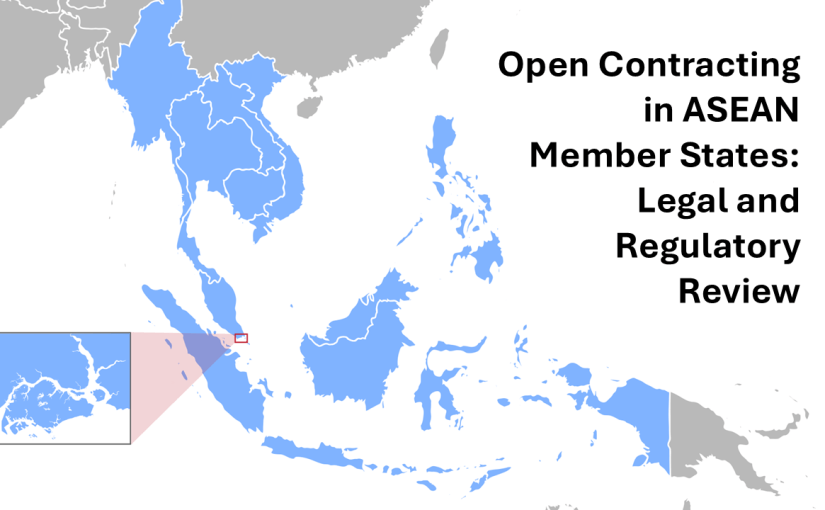
In July 2026 the United Nations Office on Drugs and Crime (UNODC) published a study on how the Association of Southeast Asian Nations (ASEAN) member states have adopted open contracting principles, from a legal and regulatory perspective.
The study drew on benchmarks set forth in the Open Contracting Partnership’s Legislative Guide; that guide identifies ten key legislative and institutional factors (many of which correspond to key requirements from article 9(1) of the United Nations Convention against Corruption (UNCAC)) on transparent and competitive procurement systems. All ASEAN Member States are parties to UNCAC.
Open contracting refers to the proactive disclosure and use of public procurement data across the entire procurement cycle, in open and machine‑readable formats, coupled with opportunities for public participation and oversight.
Evidence from multiple regions shows that open contracting can improve value for money, increase competition, enhance procurement efficiency and uncover corruption risks, particularly when implemented through robust e‑procurement platforms and open data standards, such as the Open Contracting Data Standard (OCDS).
– UNODC study, at 4
Overall, the report found that ASEAN Member States have “laid many of the legal and institutional foundations required for open contracting–particularly in terms of overarching procurement laws, e‑procurement platforms and anti‑corruption frameworks.” At the same time, however, the report concluded that “further measures would support more robust open contracting systems,” through “consolidation of procurement legislation, expansion of e‑procurement, strengthening of integrity rules and consideration of the gradual opening of procurement data to wider scrutiny.”
The study was commissioned by the UNODC Regional Office for Southeast Asia and the Pacific (ROSEAP), with the support of the Ministry of Justice of the Republic of Korea and the U.S. Bureau of International Narcotics and Law Enforcement Affairs.
This study was primarily researched and authored by GW Law’s Professor Christopher Yukins, with substantial contributions by GW Law alumnae Ellen Rolda Simic and Anisley Sanchez, Graeme Gunn and Li Anne Lim of UNODC, and Nishant Bhatnagar and Bernadine Fernz of the Open Contracting Partnership. It was peer-reviewed by UNODC’s Constantine Palicarsky, Minh Nguyen, Vickram Ragunath, Kirbee Tibayan, Putri Wijayanti, Nichanee Wongba and Annika Wythes.
Professor Christopher Yukins (George Washington University Law School) speaks on the potential use of mediation in public procurement disputes, including under the UNCITRAL Model Law on Public Procurement (2011) (which may be opened for targeted reforms) and the UNCITRAL Mediation Rules (2021). The recording (YouTube & archive) was to be delivered as part of the International Conference Commemorating UNCITRAL’s 60th Anniversary, New Delhi, India, 26 July 2026.
For more information on GW Law’s webinar series on UNCITRAL and other issues in international development, click below:
On July 17, 2026, GW Law’s Christopher Yukins presented on international procurement developments to senior attorneys and procurement officials in Pristina, Kosovo. The program was run by the U.S. Department of Commerce’s Commercial Law Development Program (CLDP).
The session was coordinated by Shaya Tavafand Melinda Zanner of CLDP and joined by Caroline Nicholas, who, as a member of the secretariat, played a key role in developing the 2011 version of the United Nations Commission on International Trade Law (UNCITRAL) Model Law on Public Procurement.
European Commission Office, Pristina
The session looked to Kosovo’s e-procurement system, the nation’s existing procurement law and regulations, and potential changes in the European Union’s procurement guidance. Kosovo is seeking admission to the European Union as a Member State. As part of that process, Kosovo has an association agreement with the EU, under which (per Article 79) Kosovo promises generally to follow the EU’s lead in procurement regulation.




.svg)